Licensed Cape Cod Contractor · Free Project Assessment
Call Now
WM Construction
Get Free Quote
Centerville, MA

Cedar Shake Siding on Cape Cod, MA

Last reviewed May 2026 by WM Construction, Licensed MA General Contractor

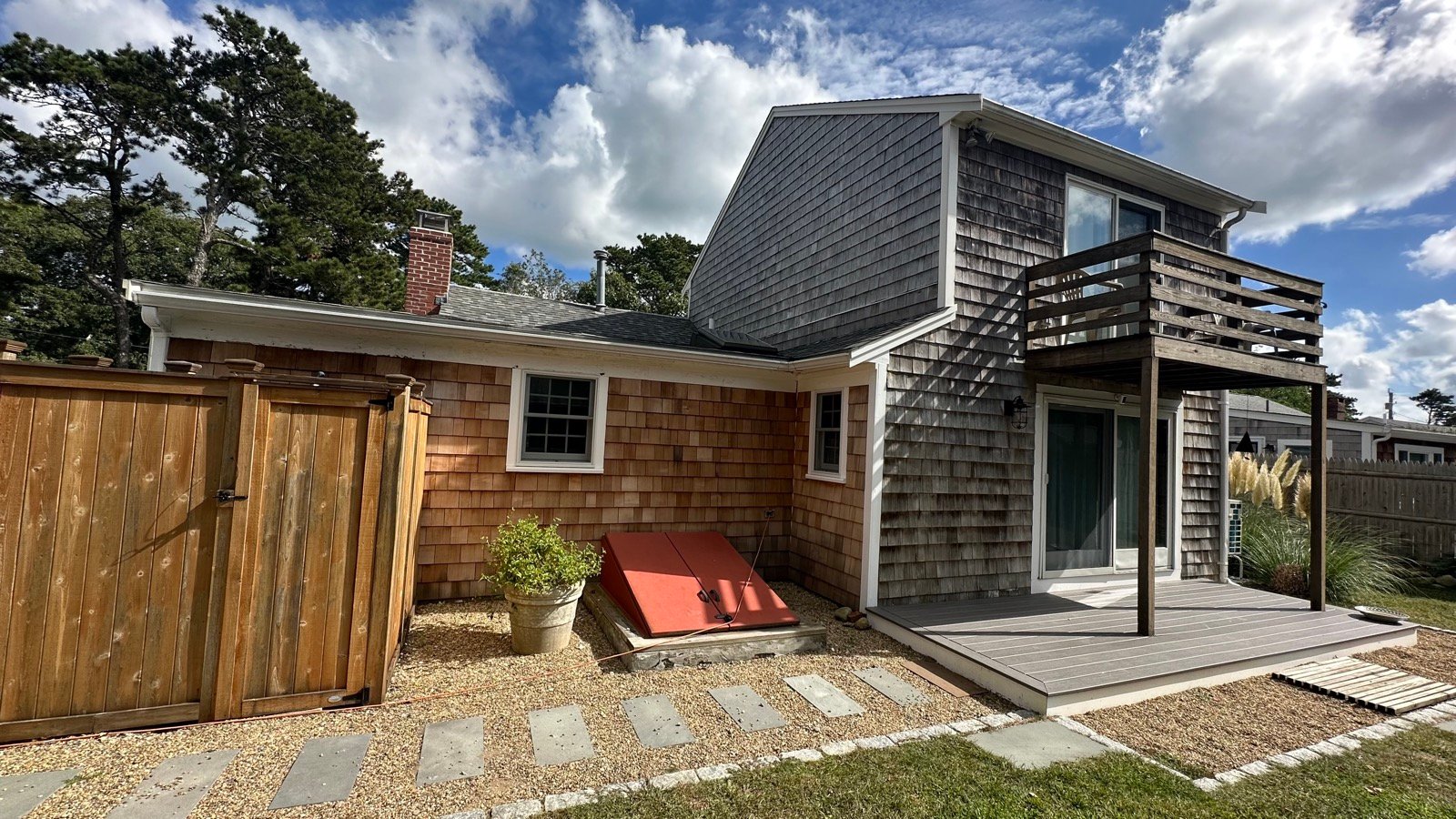
Cedar Shake Siding Cape Cod scope is the licensed installation of white cedar shingles, red cedar shakes, hand-split shakes, sawn shingles, and pre-stained cedar with stainless fasteners and breathable house wrap to Cedar Shake and Shingle Bureau trade standards. WM Construction installs Cedar Shake Siding Cape Cod work across 12 Cape Cod and South Shore towns. Cedar shake is the iconic Cape Cod exterior material, with the silver-gray weathered patina developing naturally over 1 to 3 years of coastal exposure on unfinished cedar. Quality cedar shake siding installed correctly on a Cape Cod home lasts 30 to 50 years with periodic sealant schedule on stained installations and minimal maintenance on natural-weathered installations. Cedar shake is the right choice when the homeowner wants authentic Cape Cod aesthetic, when the home sits within a historic district that requires period-appropriate materials, or when long-term resale value benefits from the premium look that defines coastal New England architecture. Licensed Massachusetts General Contractor since 2016, HIC registered, EPA RRP Lead Safe certified, approved Hanscom Air Force Base vendor since 2015, 5.0 rated across 39 verified Google reviews. Call (774) 224-8561 or visit our office at 1550 Falmouth Road, Suite 26, Centerville, MA 02632.

Cedar Shake Siding on Cape Cod, MA, WM Construction Centerville
5.0Google Rating
39Verified Reviews
9+Years in Business
MA Licensed GC + HIC + EPA RRP
Free In-Home Estimate

Cedar Shake Siding for Cape Cod Homeowners

Cedar shake siding is the regional cladding of Cape Cod. The silver-gray weathered patina that develops on unfinished cedar after 1 to 3 years of coastal exposure is what most people think of when they picture a Cape Cod home, and the material has been the dominant exterior choice on Cape Cod homes since the 1700s. Cape Cod homeowners scope cedar shake for three primary reasons. They want authentic Cape Cod aesthetic on a new construction or addition. They are restoring or replacing original cedar on a historic or older home where period-appropriate material matters. They are upgrading from vinyl or other budget cladding to a premium look that signals quality and supports long-term resale value. The material costs more upfront than vinyl and requires more maintenance attention than fiber cement, but it delivers a finish no other material can replicate. White cedar from Maine and New Hampshire is the historic Cape Cod species. Western red cedar is also widely accepted and offers larger shake formats. WM Construction (legally WM Construction) is a Cape Cod-based licensed Massachusetts general contractor, not a national siding franchise, big-box install referral, or single-trade subcontractor, operating from Centerville since 2016 and an approved Hanscom Air Force Base vendor since 2015.
Cape Cod cedar shake species and form factors at a glance
Cedar TypeSource / FormatCoastal LifespanBest for
White Cedar ShinglesMaine / New Hampshire, sawn 16 to 18 in30 to 50 yearsHistoric Capes, traditional projects
Red Cedar ShakesWestern, hand-split or sawn 18 to 24 in30 to 50 yearsLarger modern designs, wider exposures
Hand-Split Shakes5/8 in to 3/4 in butt, irregular face30 to 50 yearsAntique colonials, rustic restorations
Pre-Stained CedarFactory-applied stain, 5 to 10 yr finish30 to 40 yearsConsistent color over natural patina

Types of Cedar Shake Siding for Cape Cod Homes

Hand-Split vs Sawn Cedar by WM Construction, Centerville, MA

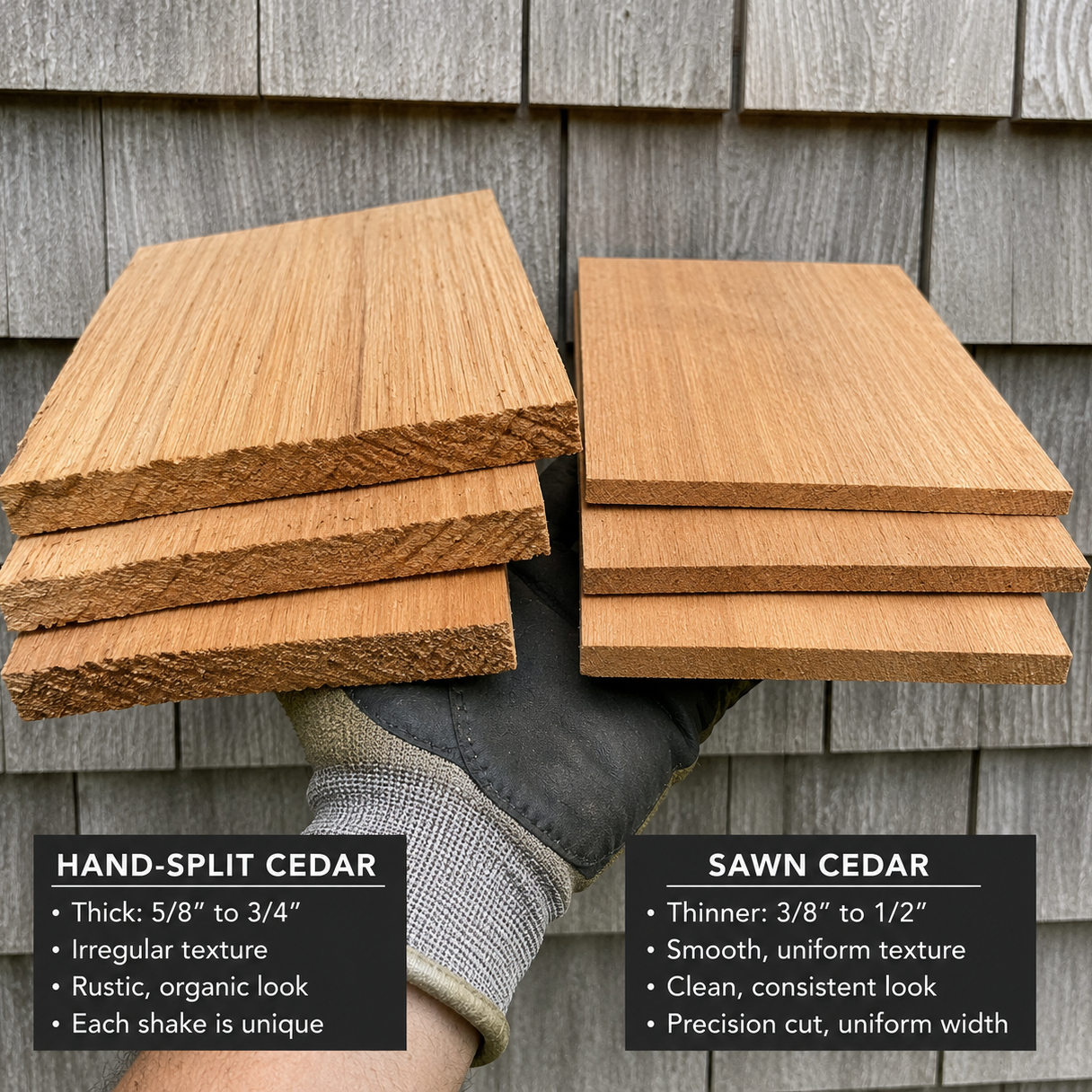
Hand-Split vs Sawn Cedar

Hand-split cedar shakes have a textured, irregular face split from the cedar log along the grain (5/8 inch to 3/4 inch butt), producing the most rustic and authentic appearance. Sawn cedar shingles are machine-sawn from cedar logs with smooth, uniform faces and consistent thickness (3/8 inch to 1/2 inch butt). Hand-split best for historic restorations and antique colonials. Sawn best for newer Cape style homes and additions where uniform appearance suits the architectural style.

White Cedar (Eastern White Cedar) by WM Construction, Centerville, MA

White Cedar (Eastern White Cedar)

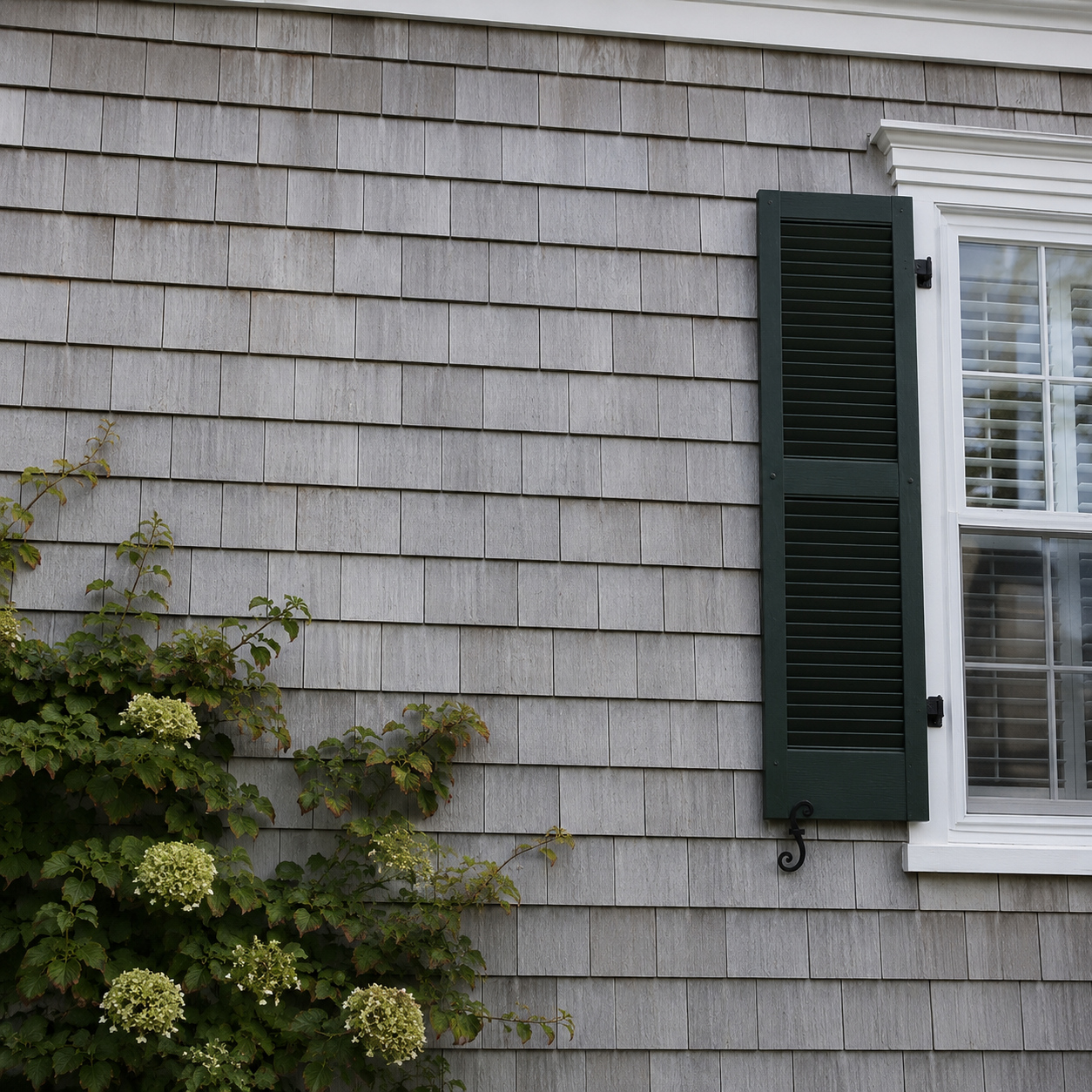
White cedar is harvested from northern Maine and New Hampshire and is the historic Cape Cod cedar species. Naturally rot-resistant, weathers to silver-gray, available in shorter shingles and shakes. Best for historic homes, traditional Cape style, and homeowners prioritizing regional authenticity.

Western Red Cedar by WM Construction, Centerville, MA

Western Red Cedar

Western red cedar grows larger than white cedar, allowing wider exposures and larger shake formats. Naturally rot-resistant with deeper red-brown undertones before weathering. Best for larger homes, modern Cape designs, and homeowners wanting larger-scale shake aesthetic.

Pre-Stained Cedar Shakes by WM Construction, Centerville, MA

Pre-Stained Cedar Shakes

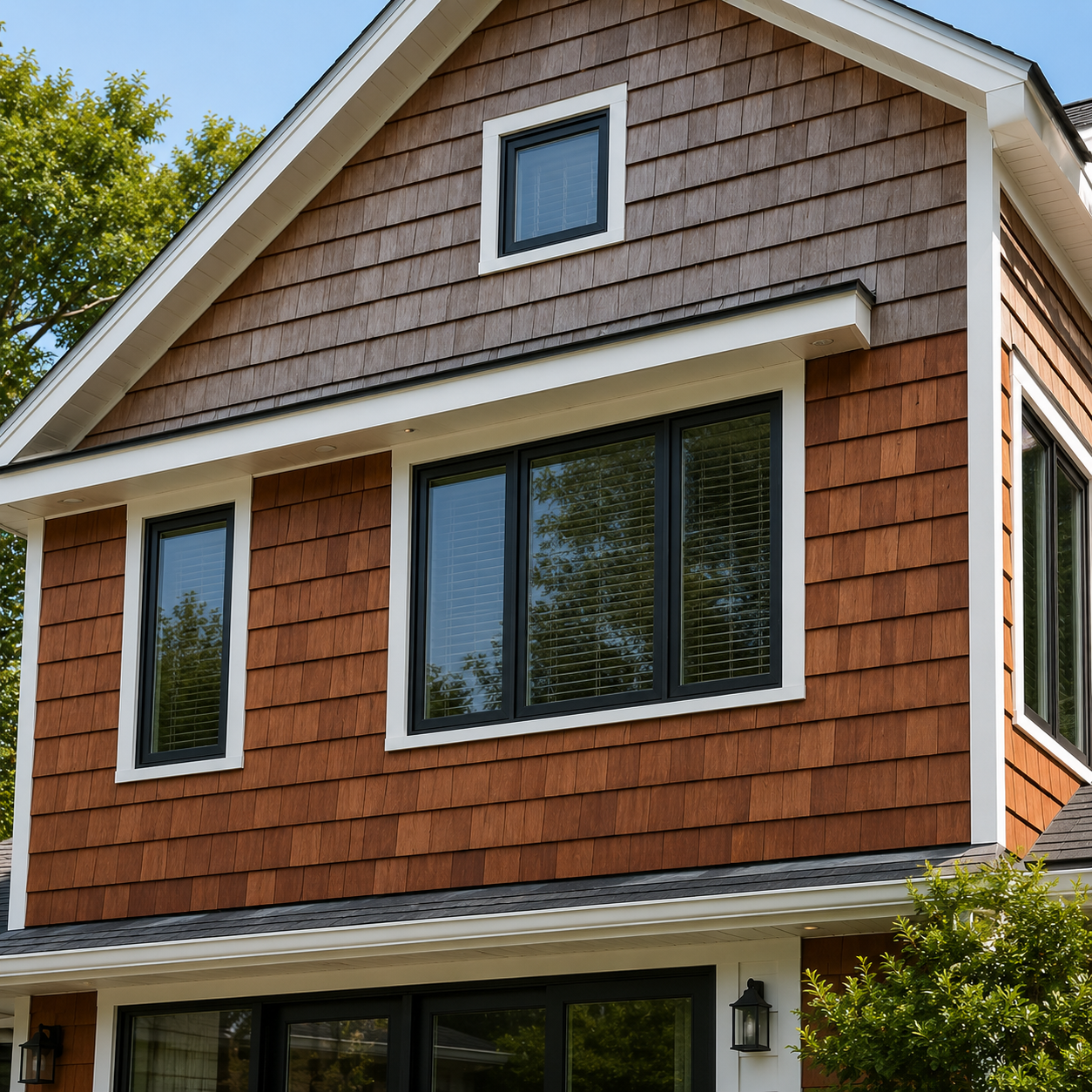
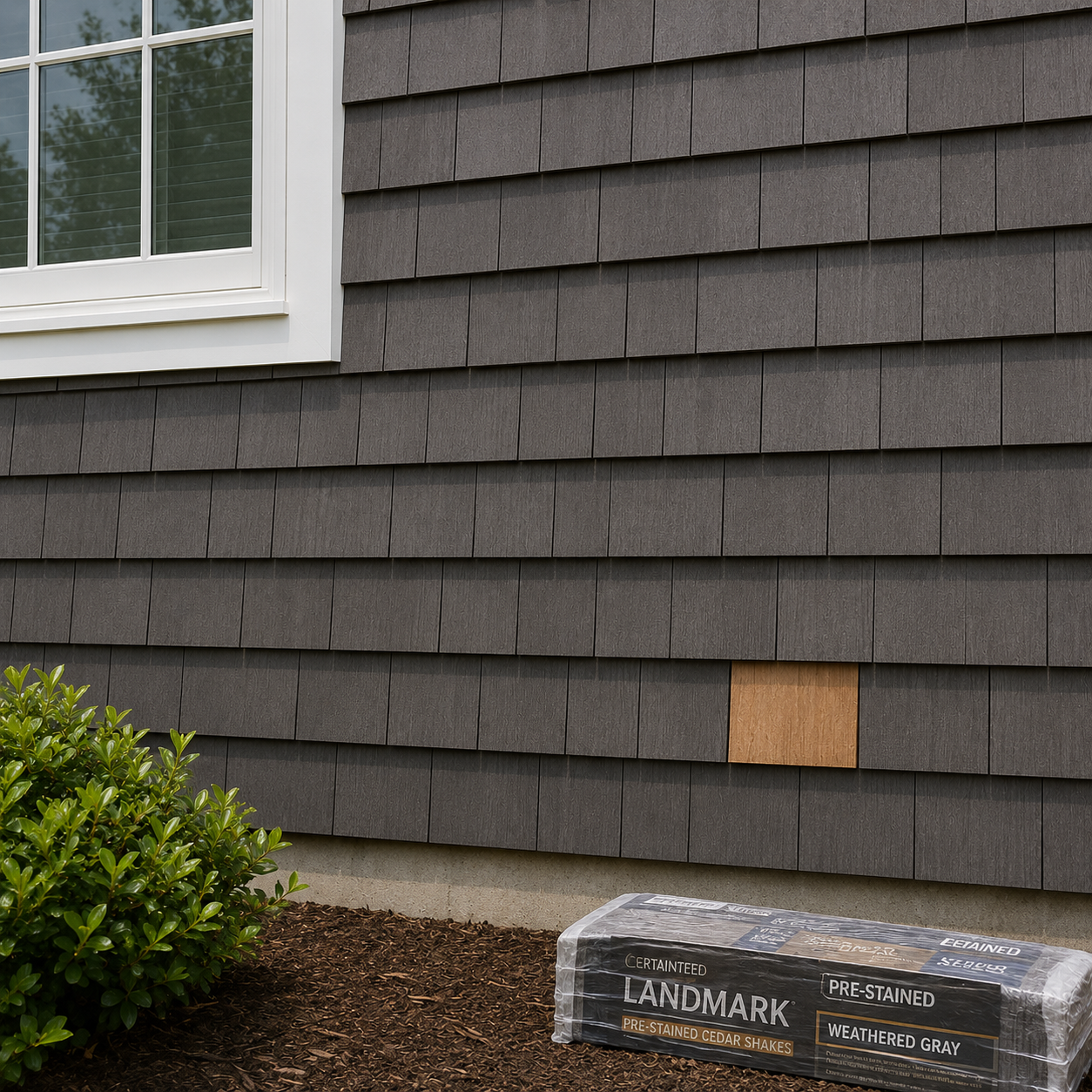
Pre-stained cedar shakes arrive from the mill with a factory-applied stain that holds color (typically a dark gray, weathered gray, or natural brown) and resists weathering for 5 to 10 years. Stain refresh schedule replaces natural weathering. Best for homeowners wanting consistent color rather than natural patina.

What to Expect from Cedar Shake Siding Done Right

Stainless Steel Fasteners on Every Shake

Cedar shake installation requires stainless steel fasteners on every nail and staple, period. Standard galvanized fasteners corrode in coastal exposure inside two years and produce black streaks down the cedar face from the corroded fastener heads. Hot-dipped galvanized is the absolute minimum, stainless is the standard, and there is no acceptable substitute. Coastal-grade fasteners are non-negotiable on Cape Cod cedar.

Proper Exposure Dimensions Per Shake Length

Each shake length has a maximum exposure (the visible portion below the overlap) defined by Cedar Shake and Shingle Bureau trade standards. 18-inch shakes typically expose 7 to 8 inches. 24-inch shakes expose 10 to 11 inches. Over-exposing shakes to save material reduces lifespan and weather protection. Under-exposing wastes material. Proper exposure dimensions are part of trade craft.

Breathable House Wrap Behind the Cedar

Cedar requires breathable house wrap or building paper underneath, not impermeable plastic sheeting. Cedar absorbs and releases moisture seasonally, and the underlayment must allow that moisture to dissipate from the back side. Trapping moisture against cedar with non-breathable wrap produces rot at the back of the shake invisible from the outside until widespread failure.

Species and Form Factor Matched to the Home

A real installer matches species (white vs red cedar) and form factor (hand-split vs sawn, shingle vs shake) to the home's architectural style and historic period. White cedar shingles on a 1700s antique colonial. Larger red cedar shakes on a modern Cape design.

One Year Workmanship Warranty in Writing

Every WM Construction cedar shake installation scope closes with a written one year workmanship warranty on the install work. Manufacturer material warranties on premium pre-stained shakes (typically 5 to 10 years on factory finish) remain separate.

How We Handle Cedar Shake Siding on Cape Cod

  1. 1

    Site Visit, Existing Envelope Assessment, and Species Discussion

    Onsite walkthrough at your Cape Cod home to inspect existing siding condition, identify failure modes, check for moisture infiltration signs, and discuss cedar species (white vs red), form factor (hand-split vs sawn), and finish state (natural-weather vs pre-stained) against home age, architectural style, and historic district status. Material samples reviewed. Pre 1978 lead paint flag raised where applicable.

  2. 2

    Material Selection and Written Estimate

    You select cedar species, form factor, exposure, finish (natural or pre-stained), and trim package. Selections finalized in writing before contract signing. Estimate breaks out tear-off and disposal, sheathing repair contingency, breathable house wrap, flashing, cedar shake material, stainless fasteners, and labor as distinct line items.

  3. 3

    Contract, Permits, and Material Sourcing

    Contract signed with milestone schedule. Building permit pulled with the Cape Cod town under 780 CMR (Massachusetts State Building Code). Historic district commission review coordinated where applicable. Insurance certificates delivered before mobilization. Cedar material sourced from established mills, with delivery coordinated to align with installation start.

  4. 4

    Tear-Off, Sheathing, House Wrap, and Flashing

    Existing siding torn off and disposed. Sheathing inspected and rot or soft spots replaced before envelope goes up. EPA RRP containment applied on pre 1978 surfaces. Breathable house wrap installed per manufacturer specifications. Flashing installed at every penetration following code-correct sequencing.

  5. 5

    Cedar Install, Trim, Final Inspection, and Walkthrough

    Cedar shakes installed with proper exposure dimensions and stainless fasteners. Trim and finish details completed. Final inspection scheduled with the Cape Cod town. Punch list documented and closed. One year workmanship warranty issued in writing.

Cedar Shake Siding on Cape Cod, MA, WM Construction project in Centerville, MA

What Affects the Cost of Cedar Shake Siding on Cape Cod

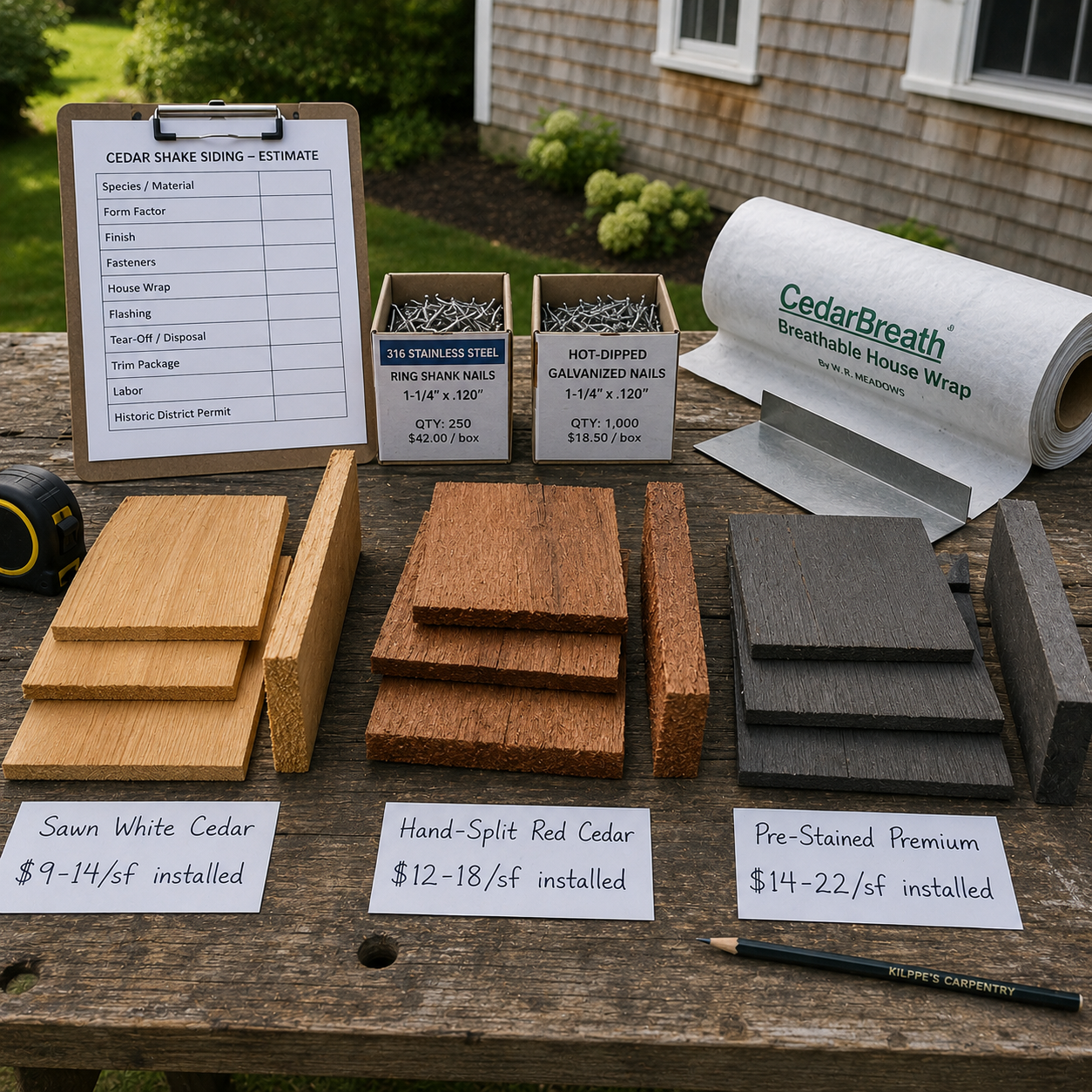
Cedar Shake Siding Cape Cod cost is shaped by species selection, form factor, finish state, and home size. As planning ranges, full cedar shake installation labor on a Cape Cod home typically runs $9 to $14 per square foot for sawn white cedar shingles, $12 to $18 per square foot for hand-split red cedar shakes, and $14 to $22 per square foot for pre-stained premium cedar, exclusive of material. A 1,200 to 1,800 square foot exterior on a Cape style home typically lands between $24,000 and $55,000 turnkey for white cedar and $35,000 to $80,000 for hand-split red cedar with stainless fasteners, breathable house wrap, flashing, trim, and labor. Species is the largest single variable: white cedar typically runs lower than red cedar on a per-square basis. Hand-split shakes run higher than sawn shingles because the production is labor-intensive. Pre-stained material runs higher than natural unfinished cedar but eliminates field-staining labor. Tear-off and disposal of existing siding is a distinct line item. Sheathing repair on rotted substrate is a contingency line item. Stainless fasteners add minor line-item cost over hot-dipped galvanized but extend envelope life by decades. Historic district review on properties within designated districts can extend project timelines and adds permit fees. Architectural complexity adds labor hours.

Customer Reviews

What Cape Cod Homeowners Say About WM Construction

5.0
★★★★★

39 Google Reviews

See All Reviews on Google →
★★★★★

Marcelo and his team did fantastic work. We did a walk through on a Monday, and by Thursday the team was already on the job. They wrapped up the project in only 3 days. They completed a full bathroom remodeling, plus drywall, painting, flooring installation and baseboard in 2 rooms. The finished result is excellent and pricing was very fair!

David C Google
★★★★★

This is the 2nd project Marcelo and his team completed for me. Once again, they did an excellent job! Highly recommended! Very good communication, showed up on time, and expert workmanship.

Nancy Gailor Google

Cedar Shake Siding Across Cape Cod and the South Shore

WM Construction installs cedar shake siding across all of Cape Cod and Barnstable County, plus the South Shore. Our office and showroom is located at 1550 Falmouth Road, Suite 26, Centerville, MA 02632, with same-day site visits available across the Mid-Cape (Centerville, Hyannis, Yarmouth, Dennis, Barnstable Village, Osterville, Cotuit). Upper Cape installs (Falmouth, Mashpee, Sandwich, Bourne) typically schedule within one week. Outer Cape (Brewster, Harwich, Chatham, Orleans, Eastham, Wellfleet, Truro, Provincetown) and South Shore (Plymouth, Kingston, Duxbury) installs cross the Sagamore Bridge or Bourne Bridge. Year round homeowners restoring original cedar on historic Capes, recent buyers upgrading from vinyl to authentic cedar aesthetic, new construction owners specifying period-appropriate cladding, and historic district homeowners working within preservation guidelines all schedule projects through the same licensed crew. Reach the office at (774) 224-8561 or visit during business hours, Monday through Friday, 8 AM to 5 PM.
Common Questions About Cedar Shake Siding on Cape Cod

Yes. Every Cape Cod town requires a building permit for full cedar shake replacement under 780 CMR (Massachusetts State Building Code). Permits in historic districts are subject to commission review, which is more common with cedar work because cedar is the period-appropriate material historic districts preserve. Pre 1978 homes also require EPA RRP Lead Safe protocols on tear-off scope. WM Construction handles all permits, historic commission coordination, and inspections.

Quality cedar shake siding installed correctly on a Cape Cod home lasts 30 to 50 years with periodic sealant schedule on stained installations and minimal maintenance on natural-weathered installations. Stainless fasteners and breathable house wrap are the two specification choices that determine whether the siding hits the higher or lower end of that range.

That depends on the look you want. Natural-weathered cedar develops the iconic silver-gray Cape Cod patina over 1 to 3 years and requires no ongoing finish maintenance. Stained cedar holds a chosen color (gray, brown, or pre-weathered tones) for 5 to 10 years and requires restaining on a schedule. Most Cape Cod historic homes are natural-weathered. Modern designs often run pre-stained.

White cedar is the historic Cape Cod species, harvested from northern Maine and New Hampshire, weathering to silver-gray, available in shorter shingles and shakes. Western red cedar grows larger, allows wider exposures and larger shake formats, and has deeper red-brown undertones before weathering.

Most Cape Cod historic districts require period-appropriate exterior cladding, which typically means cedar shake or wood clapboard rather than vinyl or fiber cement. Specific requirements vary by district. WM Construction verifies historic commission requirements during the site visit and coordinates approvals as part of the contract scope.

Get Started

Start Your Cedar Shake Siding Project on Cape Cod

Choosing cedar shake siding on a Cape Cod home is the most authentic regional cladding decision available, and the species, form factor, and finish-state choices determine whether the finished envelope reads as historically accurate or generic. When you call (774) 224-8561 or request a site visit, Jackeline or Marcelo will walk through your home, review species and form factor options against architectural style, and tell you honestly which combination fits your project. Our office at 1550 Falmouth Road, Suite 26, Centerville, MA 02632 has served as the base for WM Construction cedar shake siding projects across Cape Cod since 2016. Call or contact us when you are ready.