Pressure-Treated
Lifespan (Coastal)
10 to 15 years
Maintenance
Annual sealing
Best for
Budget-conscious framing or full deck
Last reviewed October 2026 by West Mountain Construction, Licensed MA General Contractor
West Mountain Construction is a licensed Deck Builder Cape Cod firm offering deck building, deck repair, composite deck installation, cedar deck installation, deck railing installation, and deck staining and sealing across Barnstable County. Cape Cod deck construction operates under coastal conditions that destroy inland-grade materials and fasteners inside two years: salt air corrodes standard galvanized hardware, wind-driven rain works moisture into ledger boards, and freeze-thaw cycles compound the damage. A real Deck Builder on Cape Cod specifies stainless or hot-dipped galvanized fasteners, properly flashed ledger boards, and code-compliant railing under 780 CMR (Massachusetts State Building Code). Licensed Massachusetts General Contractor since 2016, HIC registered, EPA RRP Lead Safe certified, approved Hanscom Air Force Base vendor since 2016, 5.0 rated across 45 verified Google reviews. Call (774) 836-2241 or visit our office at 195A Ridgewood Ave, Hyannis, MA 02601.
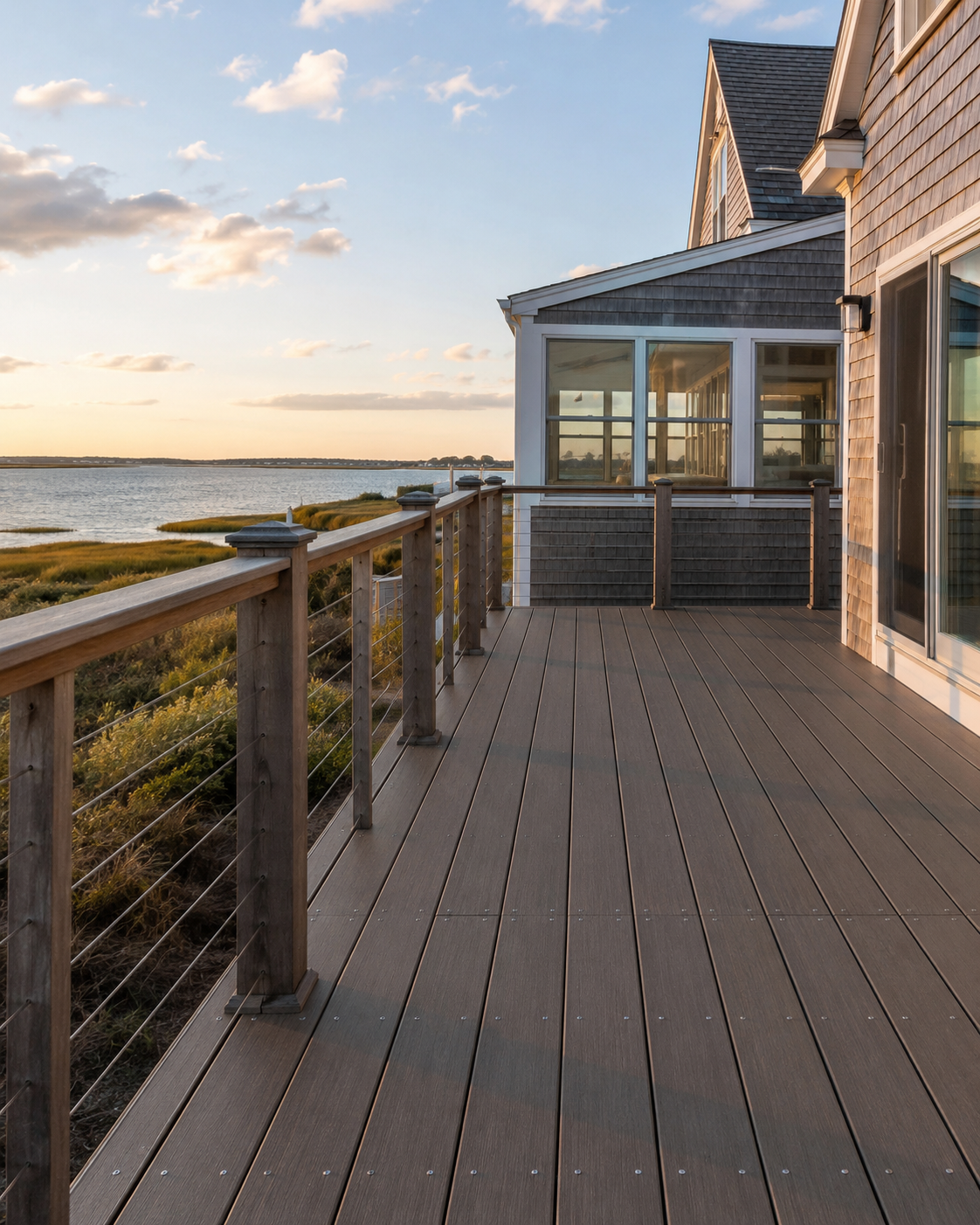
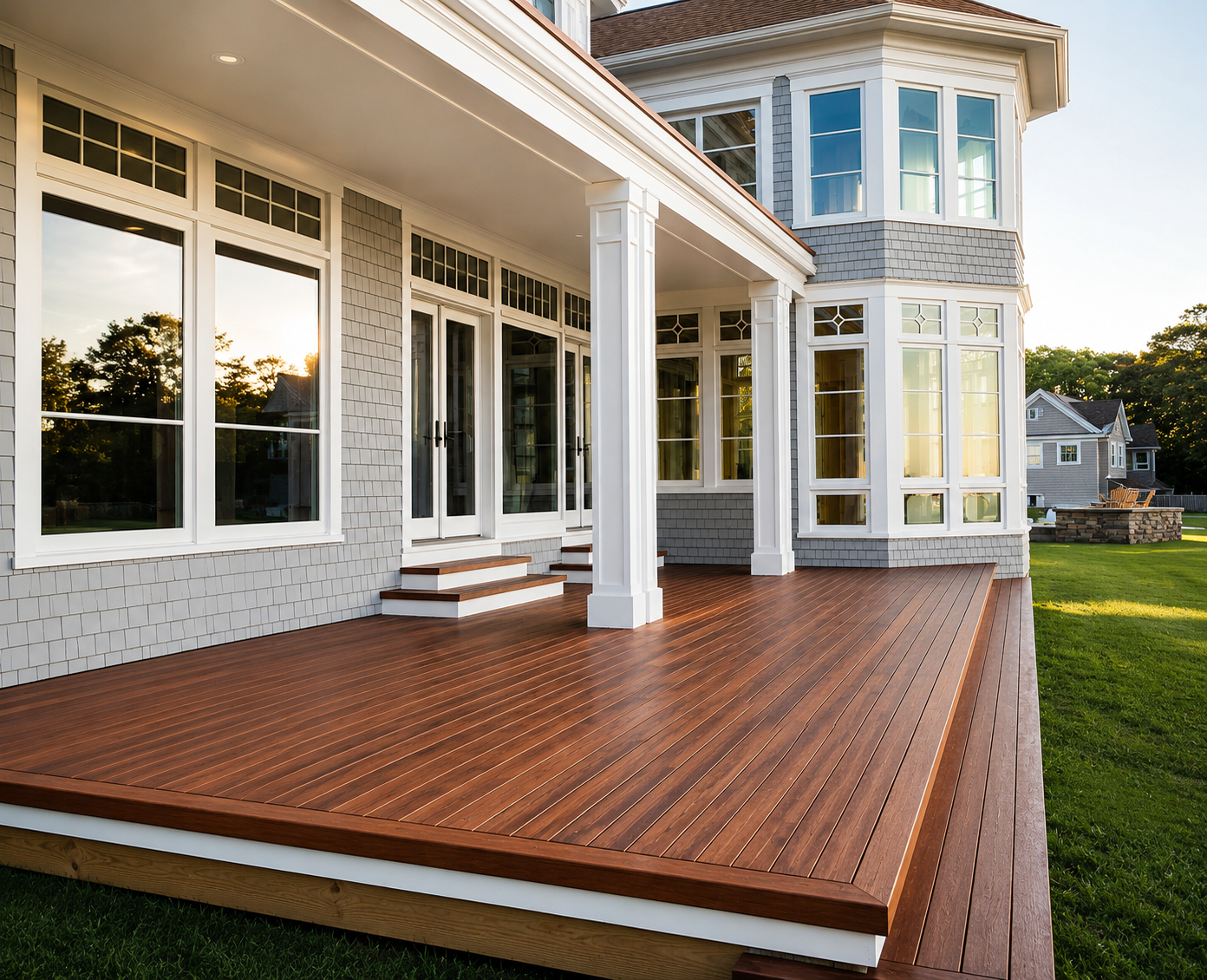
Deck work on Cape Cod covers projects ranging from new deck construction to localized repair, full board replacement, railing upgrades, and seasonal staining and sealing. The conditions a Cape Cod deck faces (salt air, wind-driven rain, freeze-thaw cycles, year round UV exposure) demand specifications most inland decks do not. A 1990s pressure-treated deck in Falmouth with rotted ledger flashing. A composite deck installation on an exposed Mashpee waterfront lot. A cedar deck staining schedule on a Yarmouth property approaching the 3-year mark. Each scope is a different scenario, and each requires the right combination of services a qualified Deck Builder offers.
West Mountain Construction (legally West Mountain Construction) is a Cape Cod-based licensed Massachusetts general contractor, not a national deck franchise, big-box install referral, or single-trade subcontractor, operating from Hyannis since 2016 and an approved Hanscom Air Force Base vendor since 2016. We pull permits in our own name under 780 CMR, specify stainless or hot-dipped galvanized fasteners on every coastal build, and close every install with a written one year workmanship warranty. For homeowners pairing deck work with siding refresh on the same exterior envelope, our Siding Contractor on Cape Cod services handle the combined scope under one contract.
Cape Cod deck projects frequently coordinate with adjacent exterior scope. Our Cape Cod siding contractor handles paired exterior envelope work, exterior restoration covers trim and flashing repair around deck-to-house intersections, and our general contractor team coordinates broader outdoor-living scope including additions and pergola work.
Every Cape Cod deck fits one of four configurations, and the configuration drives structural scope, footing count, railing scope, and construction timeline.
Ground-Level Deck. Ground-level decks sit close to grade (typically less than 30 inches high) and often do not require railings under building code. Simpler structural scope without elevation considerations, faster construction timeline. Best for homes on flat lots where the deck connects to a first-floor walkout, patio door, or low ground-floor entry.
Raised Deck. Raised decks elevate above grade (30 inches or higher) and require code-compliant guardrails (36 inches minimum height for residential, 42 inches for commercial). Most common configuration on Cape Cod homes built on full or partial basement foundations. Requires deeper footings, proper post-to-beam connections, and engineered guardrail attachment.
Multi-Level Deck. Multi-level decks combine two or more deck heights connected by stairs, often used to navigate sloping lots or to define separate use zones (cooking, dining, lounging). Higher complexity in framing, drainage planning, and stair construction. Best for sloping lots or larger lifestyle decks.
Wraparound Deck. Wraparound decks extend across two or more sides of the house, often connecting front and side or side and back. Common on Cape Cod waterfront and panoramic-view properties where outdoor circulation around the house is the design goal. Substantially larger framing scope and footing count than single-side decks.
Cape Cod deck building cost is shaped by deck size, decking material, configuration, and structural complexity. Deck size scales material and labor proportionally. Decking material is the largest single variable: pressure-treated lumber runs lowest, cedar runs higher, composite (Trex, TimberTech, AZEK) runs higher still, exotic hardwoods (ipe, mahogany) run highest. Configuration matters: ground-level decks run lowest due to simpler footings and no railings, raised decks add railing scope, multi-level decks add stair and framing complexity, wraparound decks scale footing count and framing substantially.
Site conditions affect cost: flat lots with easy excavation run lowest, sloping or ledge-rock lots add footing labor and sometimes engineering. Railing system selection swings cost: standard wood balusters lowest, glass panel highest. Stair scope adds material and labor proportional to rise. Special features (built-in benches, planters, lighting, screened-in scope) add materials and labor to the base build cost. West Mountain Construction quotes every deck in writing after an on-site assessment — no square-foot averages, no verbal estimates.
Most Cape Cod composite deck installations come from one of three triggers. A homeowner replacing an aging wood deck where the maintenance cycle (annual or biannual sealing, periodic board replacement, regular fastener tightening) has become more demanding than the homeowner wants to continue, and composite eliminates the maintenance schedule almost entirely. A new deck on a coastal property (oceanfront, bayfront, harbor-adjacent) where coastal salt exposure accelerates wood deterioration enough that composite's superior salt resistance and weather performance justify the upfront cost premium. A long-hold property where the homeowner expects to own the home 15 plus years and the 25 to 50 year manufacturer warranties on premium composite product lines deliver real economic value over the ownership period.
Composite deck installation requires material-specific knowledge that wood decking does not. Capped composite (with PVC outer wrapper) outperforms uncapped on coastal exposure. Hidden fastener systems require specific decking groove profiles matched to manufacturer. Span ratings vary by manufacturer and joist spacing must be specified to match. Proper substrate ventilation prevents heat-related thermal expansion. West Mountain Construction is a Cape Cod-based licensed Massachusetts general contractor, not a national franchise booking jobs through a 1-800 line, operating from Hyannis since 2016 and an approved Hanscom Air Force Base vendor since 2016.
| Composite Tier | Example Brands | Typical Warranty | Best For |
|---|---|---|---|
| Entry-tier capped | Trex Enhance, TimberTech EDGE, MoistureShield Vision | 25 yr fade/stain | Lowest composite premium over wood |
| Mid-tier capped | Trex Transcend, AZEK Vintage, Fiberon Concordia | 25–30 yr | Most Cape Cod composite decks |
| Premium PVC | AZEK Harvest, AZEK Arbor, Trex Transcend Lineage | 50 yr limited | Waterfront, max coastal durability |
| Mineral-core | Deckorators Voyage, Vault | 25–50 yr | Full-sun decks, low heat retention |
Cape Cod composite deck installation cost is shaped by deck size, composite product tier, configuration, and structural complexity. Composite product tier is the largest single material variable: entry-tier capped composite runs lowest, mid-tier capped runs higher, premium PVC runs higher still, mineral-core runs highest. Premium tiers carry 50 year manufacturer warranties that justify the cost over long ownership horizons but represent a meaningful upfront premium. Deck size scales material and labor proportionally.
Configuration matters: ground-level decks run lowest due to simpler footings and no railings, raised decks add railing scope, multi-level decks add stair and framing complexity, wraparound decks scale footing count substantially. Hidden fastener systems add modest material cost over face-screwed installation but improve aesthetic and protect warranty. Composite railing systems run higher than wood balusters. Site conditions affect cost: flat lots with easy excavation run lowest, sloping or ledge-rock lots add labor. We provide line item estimates with composite product tier, fastener system, and railing scope as distinct categories. Call (774) 836-2241.
Most Cape Cod cedar deck installations come from one of three triggers. A homeowner of a traditional Cape Cod or shingled cottage where cedar matches the architectural language of the home and composite would visually conflict with the cedar shake siding, weathered shingle aesthetic, or historic character. A natural wood preference where the tactile and visual qualities of real cedar (warm tone, natural grain, eventual silver-gray weathering) take priority over composite's lower maintenance and the homeowner is willing to accept the sealing schedule. A historic district property where natural materials are required by deed restriction, town historic commission rules, or neighborhood association covenants prohibiting synthetic decking.
Cedar deck installation requires species and grade decisions that wood-substitute and composite installations do not. Western Red Cedar and Atlantic White Cedar are the two most common species on Cape Cod, with Atlantic White Cedar carrying historic regional authenticity. Clear grade has minimal knots and runs highest cost; select knotty and knotty grades have visible character. Kiln-dried cedar runs more dimensionally stable than air-dried but costs more. West Mountain Construction is a Cape Cod-based licensed Massachusetts general contractor, not a national franchise booking jobs through a 1-800 line, operating from Hyannis since 2016 and an approved Hanscom Air Force Base vendor since 2016.
| Cedar Variable | Options | Trade-Off | Best For |
|---|---|---|---|
| Species | Western Red / Atlantic White | Availability vs regional authenticity | Modern Cape vs historic district |
| Grade | Clear / Select Knotty / Knotty | Cost vs visible character | Premium vs rustic aesthetic |
| Drying | Kiln-dried / Air-dried | Stability vs cost | Frameless aesthetic vs budget |
| Finish | Natural weather / Sealed / Stained | Maintenance vs color preservation | Silver patina vs original tone |
Cape Cod cedar deck installation cost is shaped by deck size, cedar species and grade, configuration, and finish scope. Cedar species is a meaningful variable: Western Red Cedar runs lower and is broadly available, Atlantic White Cedar runs higher due to limited regional supply but delivers historic authenticity. Cedar grade swings cost: knotty grade runs lowest, select knotty mid-range, clear grade highest. Kiln-dried cedar runs higher than air-dried but offers better dimensional stability.
Deck size scales material and labor proportionally. Configuration matters: ground-level decks run lowest, raised and multi-level decks add scope, wraparound decks scale footing count substantially. Stainless steel fasteners run higher than galvanized but are non-negotiable on cedar (cedar tannins react with non-stainless fasteners). Initial finish coat (sealed or stained) adds material and labor. Site conditions affect cost. We provide line item estimates that break out species, grade, fasteners, finish coat, and railing as distinct categories. Call (774) 836-2241.
Most Cape Cod deck railing installations come from one of three triggers. A homeowner whose existing wood railing has failed (rotted balusters, corroded fasteners, loose posts, deteriorated top or bottom rail) and the failure is isolated to the railing system while the deck framing remains sound. An aesthetic upgrade where the homeowner is replacing aging wood baluster railing with aluminum, glass panel, or cable rail to modernize the visual style or to preserve panoramic views on Cape Cod waterfront, harbor, or panoramic-view properties. A code-correction scope where the existing railing fails current IRC R507 guardrail requirements (height under 36 inches for residential decks 30 inches or higher above grade, baluster spacing wider than the 4-inch sphere rule, or post anchoring inadequate to handle the 200 pound concentrated load required by code).
The defining technical reality of deck railing installation is that the railing is one of the most heavily-inspected components on any Cape Cod deck, and code violations on inspection are common on owner-built or unpermitted railing work. West Mountain Construction is a Cape Cod-based licensed Massachusetts general contractor, not a national franchise booking jobs through a 1-800 line, operating from Hyannis since 2016 and an approved Hanscom Air Force Base vendor since 2016.
| Material | View Preservation | Coastal Maintenance | Best For |
|---|---|---|---|
| Wood baluster | Low (vertical pickets) | Sealing every 1–2 years | Traditional aesthetic, budget |
| Aluminum | Low–medium | Essentially none (powder-coated) | Low-maintenance, coastal homes |
| Cable rail | High (near-transparent) | Periodic re-tensioning | View-driven, modern aesthetic |
| Glass panel | Highest | Regular cleaning only | Waterfront, premium aesthetic |
Cape Cod deck railing installation cost is shaped by railing material, deck perimeter length, post replacement scope, and configuration complexity. Railing material is the largest variable: wood baluster runs lowest, aluminum runs higher, cable rail runs higher still, glass panel runs highest. Deck perimeter length scales material and labor proportionally. Post replacement scope affects cost: railing-only installations on sound posts run lowest, installations requiring post replacement add structural and material cost, installations requiring post structural blocking installation add the most.
Stairs add railing scope proportional to stair length and require continuous handrail per code. Custom colors and finishes on aluminum systems can add cost and lead time. Coastal-rated hardware (stainless steel, Simpson Strong-Tie ZMAX) runs higher than standard galvanized but is non-negotiable on Cape Cod coastal exposure. Permit fees apply only when post structural work or broader deck scope is part of the project. We provide line item estimates that break out material, post replacement, hardware, and labor as distinct categories. Call (774) 836-2241.
Most Cape Cod deck staining and sealing projects come from one of three triggers. Scheduled maintenance refinishing on cedar or wood decks where the maintenance schedule has come due (1 to 2 year intervals on coastal exposure, 2 to 3 year intervals on inland properties with less salt and sun) and the homeowner is preserving the original finish before weathering compromises the wood. An aesthetic refresh on an aged deck where the existing finish has worn or weathered (graying wood, faded stain color, water no longer beads on the surface), and the homeowner wants visual restoration without rebuilding or repairing. A stain change where the homeowner is shifting from one finish category to another (clear sealer to semi-transparent stain, semi-transparent to solid color, or natural weathered to refinished).
The defining technical reality of deck staining and sealing is that surface prep determines outcome more than product selection. Most failed deck stains fail at the prep stage, not the application stage. Decks not properly cleaned, sanded, or dry produce stain that doesn't bond, peels within months, or shows tannin bleed-through. West Mountain Construction is a Cape Cod-based licensed Massachusetts general contractor, not a national franchise booking jobs through a 1-800 line, operating from Hyannis since 2016 and an approved Hanscom Air Force Base vendor since 2016.
| Finish Category | Grain Visibility | Coastal Reapplication | Best For |
|---|---|---|---|
| Clear penetrating sealer | Highest (no pigment) | ~ Annual | Natural wood color preservation |
| Semi-transparent stain | High (tinted, grain visible) | 1–3 years | Most cedar and wood decks |
| Solid color stain | None (opaque) | 3–5 years | Older weathered decks, color change |
| Hardwood oil | High (penetrating) | 1–2 years | Ipe, mahogany, exotic species |
Cape Cod deck staining and sealing cost is shaped by deck size, prep scope, product selection, and existing finish condition. Deck size scales material and labor proportionally. Prep scope is the largest variable: lightly weathered decks needing cleaning only run lowest, decks needing cleaning plus light sanding run higher, decks with failed previous finishes requiring full sanding to bare wood run highest. Product selection swings cost: clear penetrating sealers run lowest in material, semi-transparent stains run higher, solid color stains run higher still, premium coastal-rated products (Sikkens Cetol DEK-Finish, Penofin Marine, Cabot Australian Timber Oil) run highest.
Existing finish category affects prep cost: refreshing existing semi-transparent stain runs lower than changing from clear to solid color (which requires removal of existing finish first). Coastal-rated products run higher than standard residential products but extend reapplication intervals on Cape Cod exposure. Weather delays from rain or temperature out of spec can extend project duration. We provide line item estimates that break out cleaning, sanding, material, and application labor as distinct categories. Call (774) 836-2241.
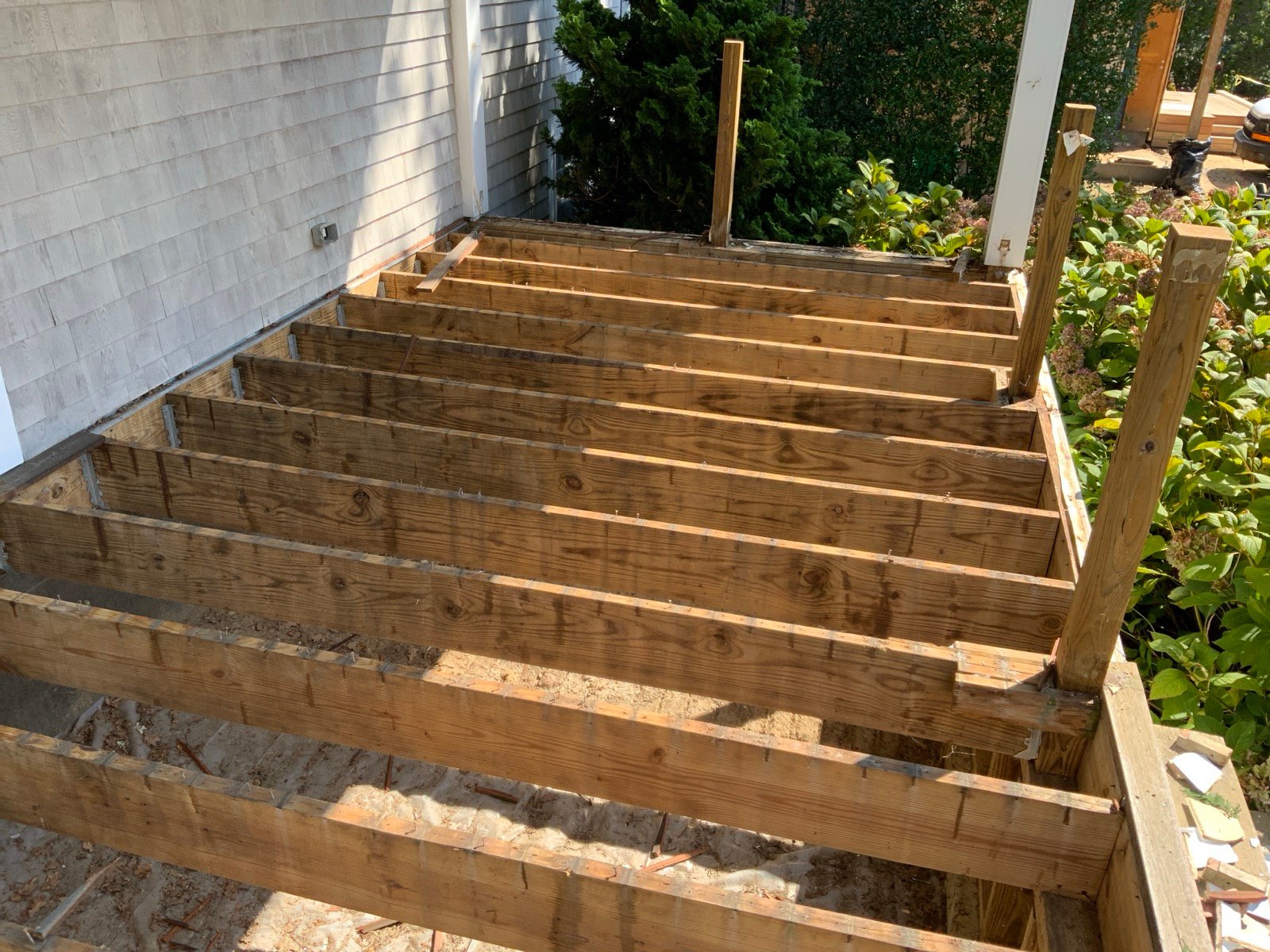
New deck construction on Cape Cod typically takes 1 to 3 weeks depending on size and material: proper footing, framing, ledger board flashing, and salt-air-rated fasteners. Pressure-treated, composite, cedar, or mahogany. Licensed GC, HIC certified. One year warranty.
Explore Deck Building on Cape Cod →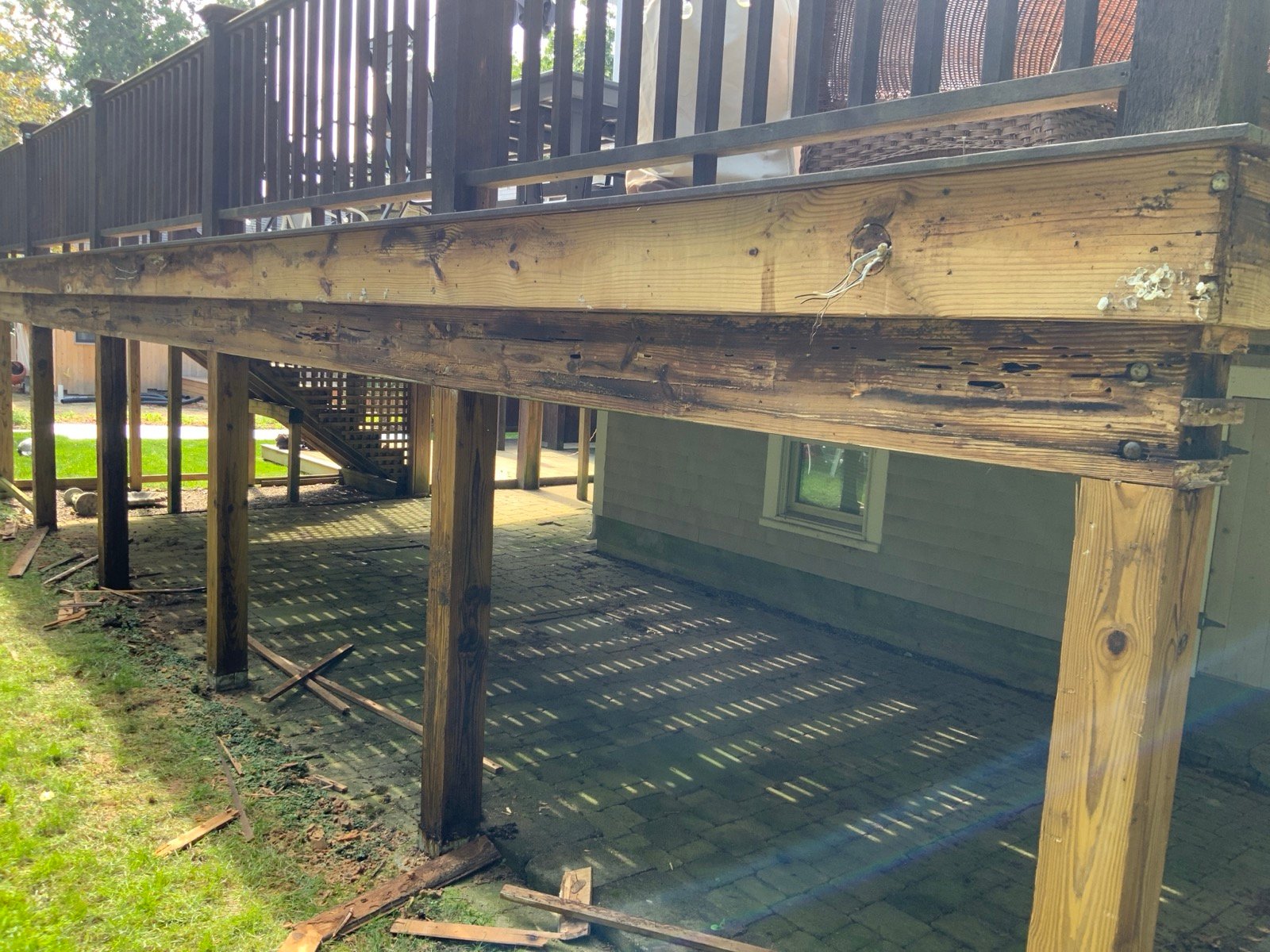
Deck repair on a Cape Cod home often addresses salt-air rot, failed fasteners, loose railings, or rotted decking boards: not always a full rebuild. Structural inspection first, targeted repair second. Licensed GC, HIC certified, one year workmanship warranty on all work.
Explore Deck Repair on Cape Cod →A qualified Cape Cod deck builder specifies stainless steel or hot-dipped galvanized fasteners and connectors for every build. Standard electroplated galvanized hardware corrodes inside two years in coastal exposure, producing failures at the joist hangers, ledger bolts, and railing connections that show up as loose boards, sagging joists, or worse. Coastal hardware costs more upfront and lasts decades.
The ledger board (where the deck attaches to the house) is the single most failure-prone connection on any deck. Proper flashing routes water away from the house wall, prevents rot at the rim joist, and protects the structural attachment point. Failed ledger flashing is the leading cause of deck collapse incidents nationally. Verify flashing detail before the deck gets covered.
Massachusetts 780 CMR sets minimum residential deck railing height at 36 inches with maximum baluster spacing of 4 inches. Code compliance is mandatory for permit signoff and protects the homeowner against liability if a child or guest falls through under-spec railings. Skipping these requirements fails final inspection and creates legal exposure.
Massachusetts requires a Construction Supervisor License and a Home Improvement Contractor registration for residential deck work involving permitted scope. Verify both numbers on the state website before signing. Unlicensed deck builders cannot legally pull permits.
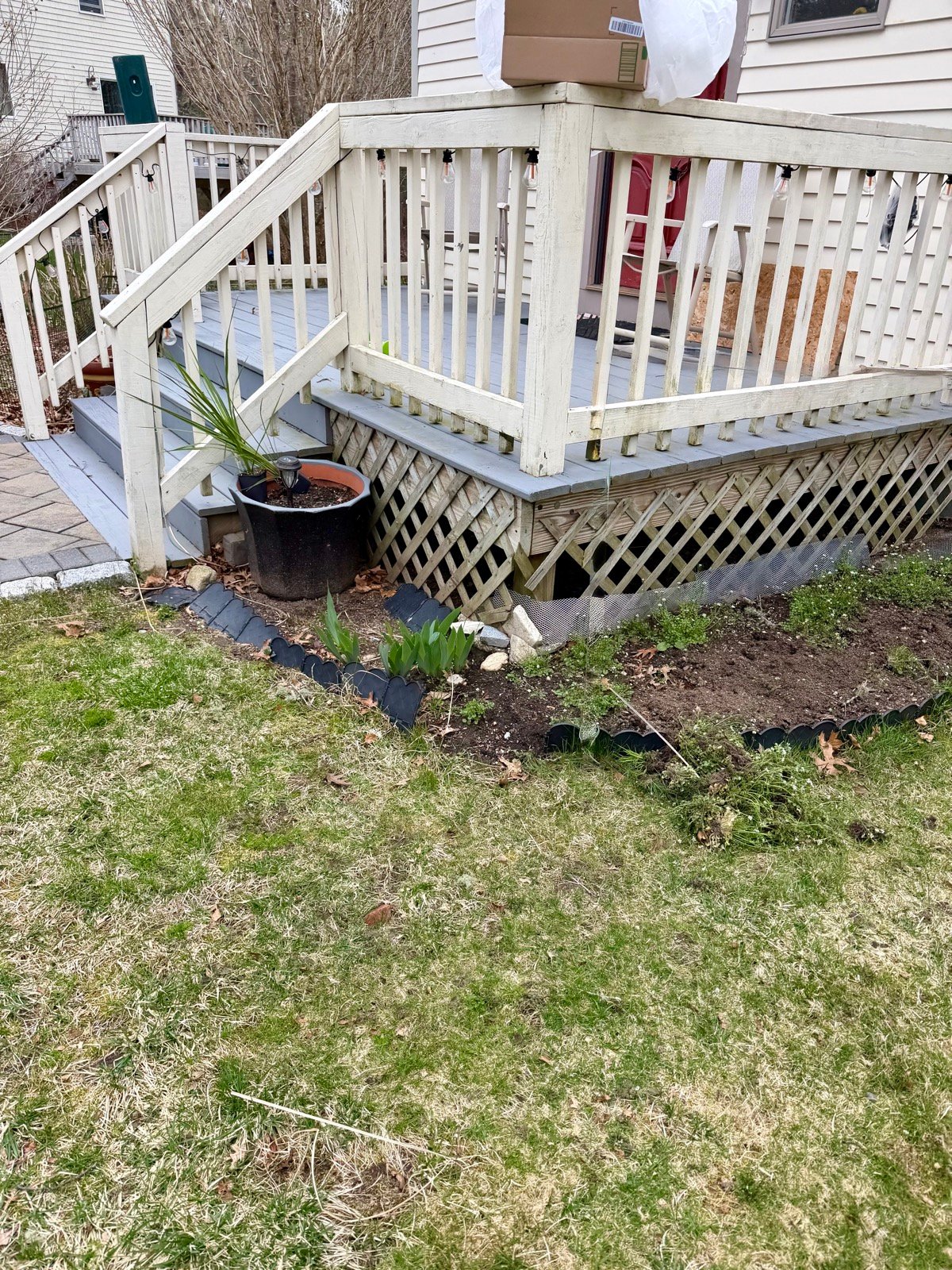
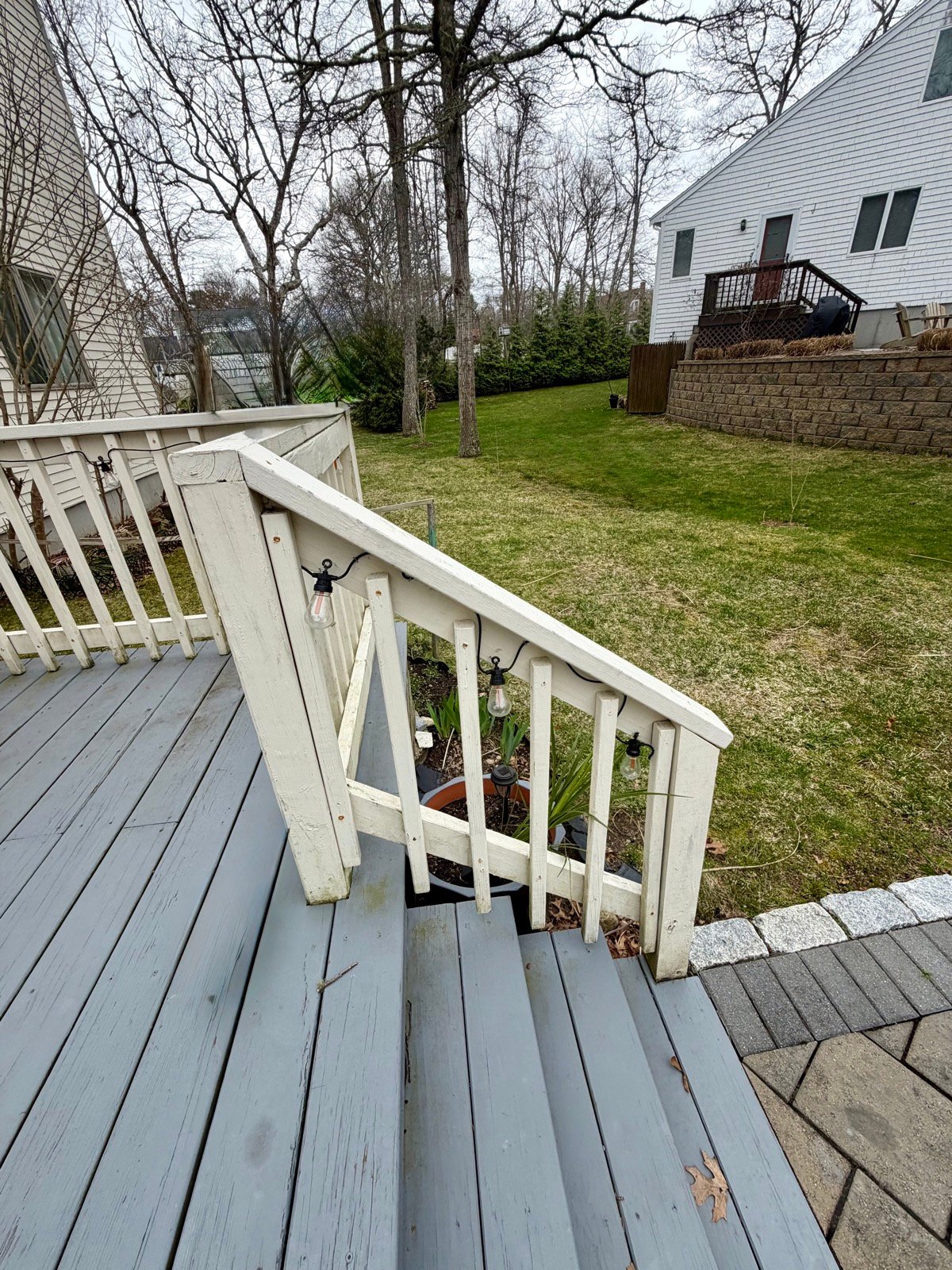
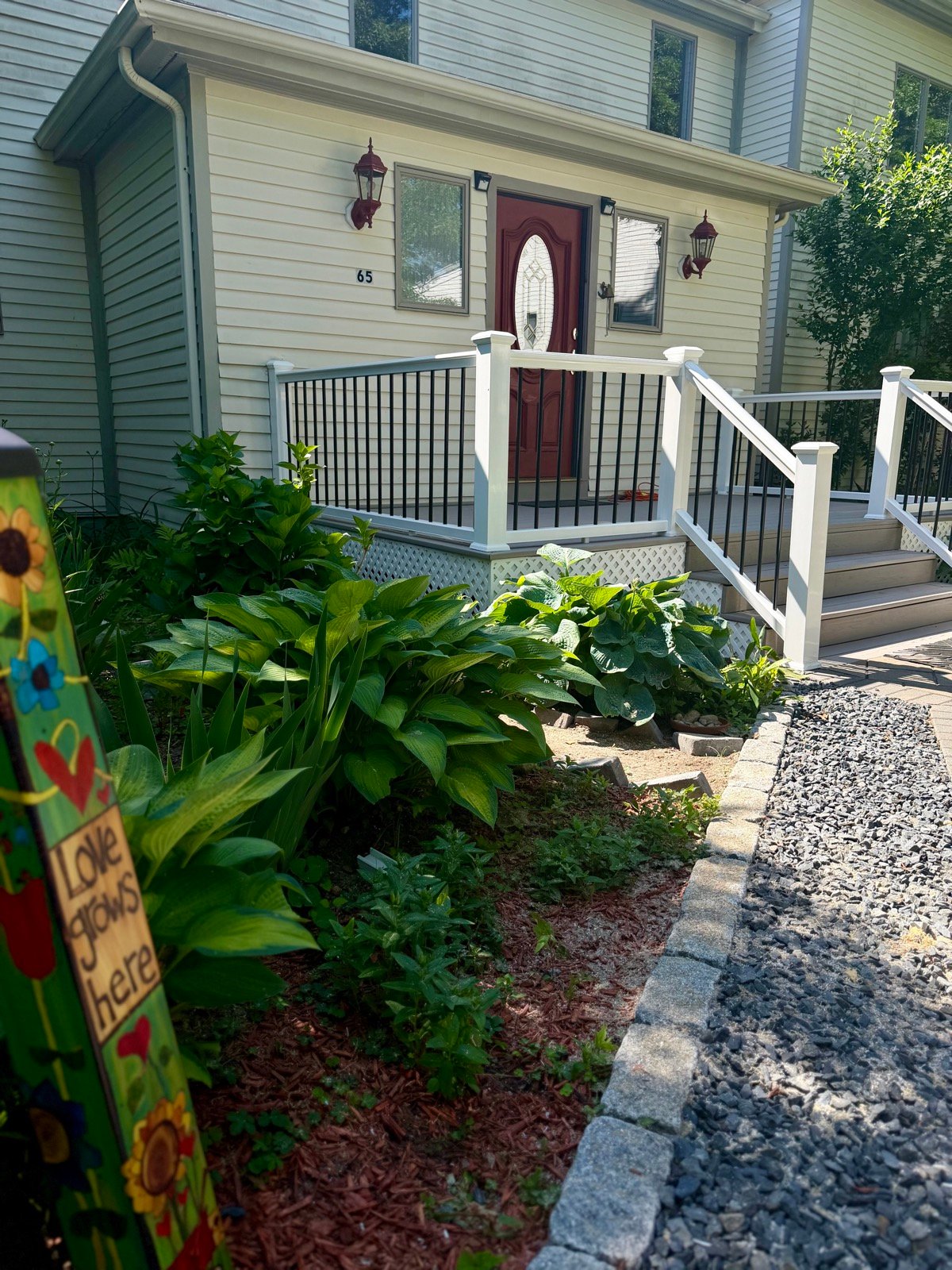
Size and shape, the decking material you choose, the site conditions, and how much railing and stair work the design needs. Lots near the water often need extra structural allowance for wind and moisture exposure. We assess the property first, then put a firm price in writing.
If the framing is sound and you have soft boards, a few damaged spots or corroded hardware, repair is usually the right call. If the ledger, posts or framing are compromised, replacement protects your money better than patching. We inspect the structure before recommending a scope.
We build and repair across the whole Cape: Provincetown, Truro, Wellfleet, Eastham, Orleans, Chatham, Brewster, Harwich, Dennis, Yarmouth, Falmouth, Bourne, Mashpee and Sandwich, plus every Barnstable village including Hyannis, Centerville, Osterville and Cotuit. We also cover Plymouth and Sagamore.
Massachusetts requires a Construction Supervisor License for the structural work and a Home Improvement Contractor registration for residential remodeling. We hold both, CS-122691 and HIC 188708, alongside a documented safety program led by a certified Construction Safety Specialist.
Every deck we install carries a one year written workmanship warranty in the contract. If something fails because of our installation, we respond within two business days, inspect it and correct it at no cost, with no deductible. Coverage transfers if you sell within the year.
Yes. Deck permits are issued by the Town of Barnstable Building Division at 200 Main Street, and building permits need Board of Health sign off before they are released. We file the application as part of the project so the work is inspected under the correct licensee.
Clear the area around the build zone, move furniture and planters, and flag any irrigation lines or underground utilities near the footprint. Setting the site up before day one means fewer interruptions during the build and a shorter punch list at the end.
Researching a Deck Builder Cape Cod homeowners can trust is a significant decision, and we respect the work of getting it right. When you call (774) 836-2241 or request a site visit, Jackeline or Marcelo will walk through your property, review deck scope, materials, and licensing, and schedule an onsite visit at your convenience. Our office at 195A Ridgewood Ave, Hyannis, MA 02601 has served as the base for West Mountain Construction deck builder services across Cape Cod since 2016. Licensed Massachusetts General Contractor with HIC registration. Call or contact us when you are ready.