The Cape Cod region operates under conditions that shape every construction and renovation project differently than inland Massachusetts. Understanding these conditions is part of what separates contractors who specialize regionally from contractors who occasionally take Cape projects.
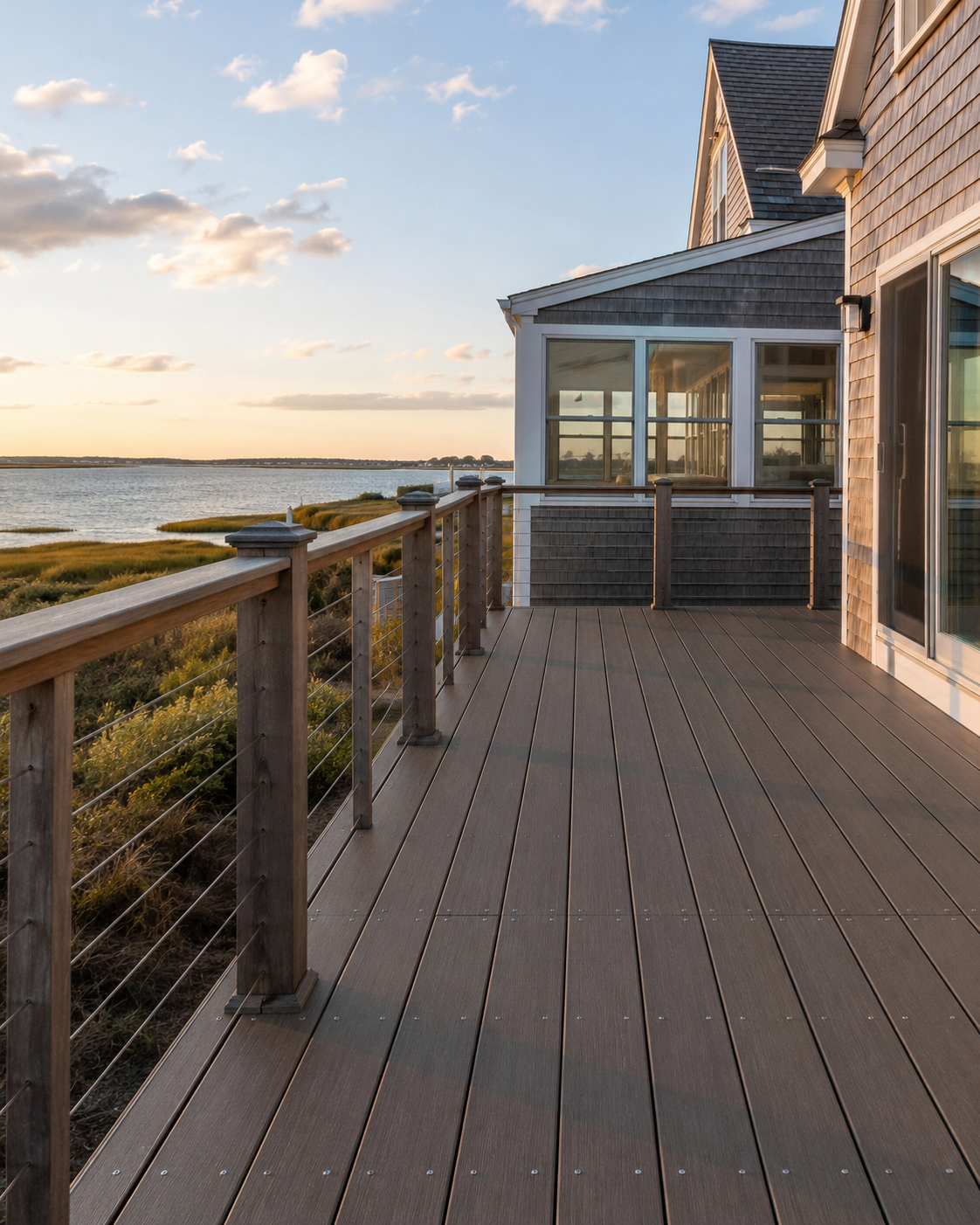
Coastal salt exposure is the defining environmental factor. Salt air corrodes standard galvanized fasteners, accelerates degradation of wood decking and siding, and shortens the maintenance cycle on exterior finishes meaningfully compared to inland properties. Real Cape Cod construction uses stainless steel or coastal-rated hardware (Simpson Strong-Tie ZMAX or equivalent) on exterior connections, specifies coastal-rated finish products, and plans maintenance schedules that account for the region’s salt and sun exposure.
Original Cape architecture is the second defining factor. Pre-1978 housing stock is concentrated heavily across the Cape, with substantial pre-1900 antique homes in the Outer Cape towns and historic districts throughout. Original Cape Cod homes have construction realities that current-code construction does not: lath-and-plaster walls, original single-pane windows with weight-and-pulley operation, original heart pine or chestnut flooring, original trim and millwork, and lead paint requiring EPA RRP-certified contractor protocols on any work disturbing painted surfaces.
Town-specific regulations add another layer. Each Cape Cod town has its own building department, historic commission review processes, conservation commission jurisdiction, lot coverage limits, septic regulations, and flood zone restrictions. Real regional contractors maintain working knowledge of each town’s requirements rather than discovering them mid-project.
Seasonal occupancy patterns also affect project scheduling. Year-round residents typically schedule projects without occupancy constraints. Second-home owners often prefer scope completion during their off-season visits or while the home is unoccupied.